Buying guides
Best dog cooling mats UK: three good options for hot days
A cooling mat should offer your dog a comfortable choice—not become an excuse for a midday walk or a substitute for shade, water and sensible heat management.
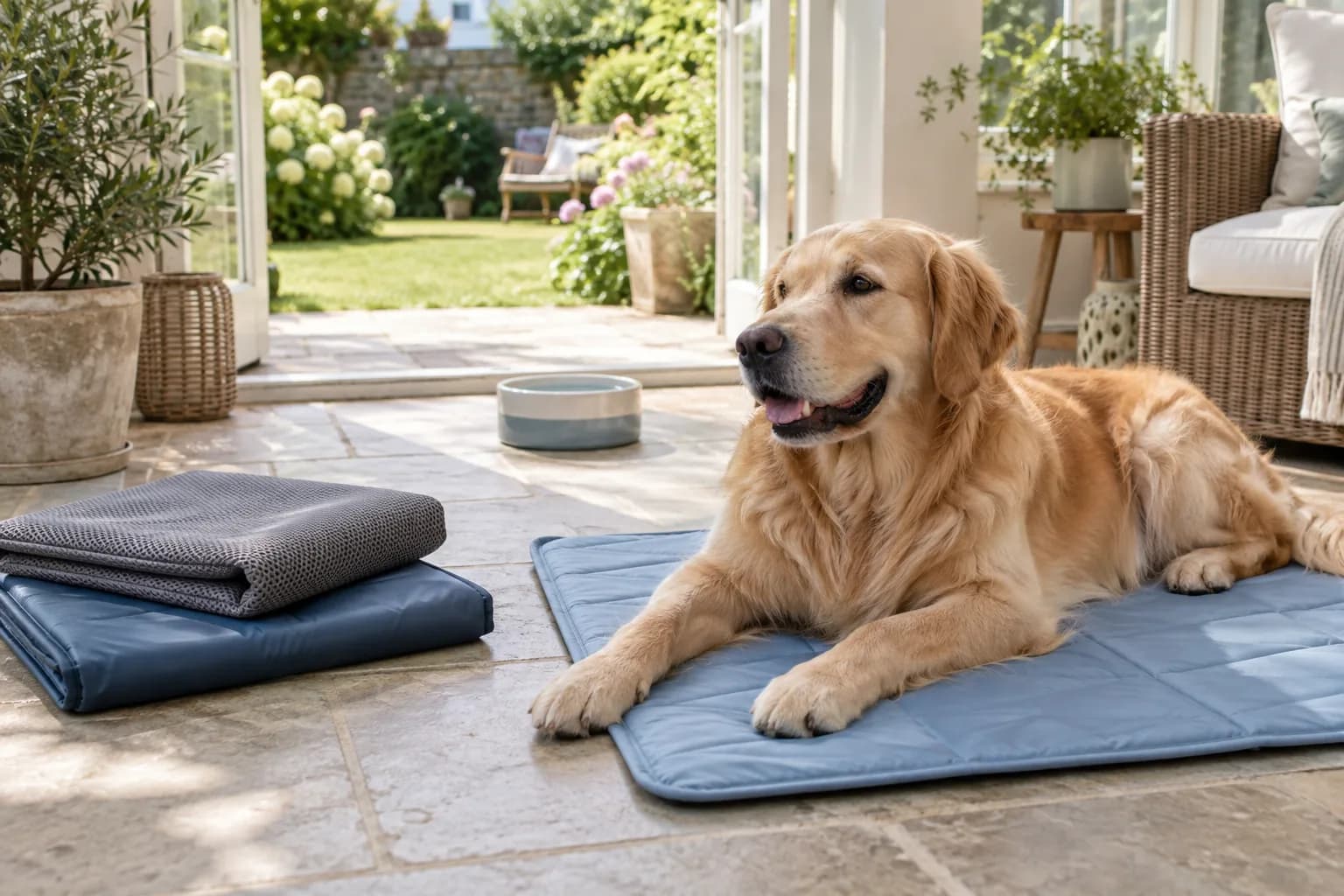
Dogs are excellent at locating the one cool bathroom tile in a warm house. A cooling mat simply gives them another place to choose—preferably one that is larger than their front half, less slippery than the kitchen floor and positioned somewhere they already feel comfortable resting.
That word choose matters. A dog should be able to lie on the mat, leave it when it warms or feels uncomfortable, move into shade and reach fresh water. The mat is a piece of comfort equipment, not an air-conditioning system and certainly not protection against an unsafe walk, car or conservatory.
Our short answer: the standard Trixie Cooling Mat is the strongest all-rounder because its six sizes make a decent fit more likely and its composition and instructions are unusually transparent. Choose the Soft version if cushioning is the reason your dog ignores thinner pads. The Green Pet Shop pad is a useful foldable alternative, especially if its weight-based sizing and storage shape suit your dog and home.
The best dog cooling mats in the UK
Pick 1 · best all-round size range
Trixie Cooling Mat
The standard Trixie mat comes in six sizes from 40 × 30cm to 110 × 70cm, a notably useful range when dogs do not arrange themselves according to neat small, medium and large labels. Body contact activates the gel, so there is no reservoir to fill, cable to position or freezer space to surrender. Trixie says the mat cools for several hours and reactivates after a short period without contact. The surface wipes clean, the mat folds for transport and the manufacturer publishes both the outer materials and cooling-liquid composition. Those simple, verifiable details make it our most versatile everyday choice.
Keep in mind: Trixie instructs owners not to use the mat in direct sun or at temperatures above 45°C, where the gel may heat, liquefy and lose its cooling effect. It is a smooth PVC/polyester surface rather than a padded bed, so some dogs may need a gradual introduction and others may simply prefer the floor. Store it spread out as directed, check it for punctures and supervise any dog inclined to scratch, dig or chew bedding.
Pick 2 · best for a little more cushioning
Trixie Cooling Mat Soft
This version adds a 2cm foam-and-gel filling, which changes the proposition more than the similar name suggests. A dog with prominent joints, an older dog who rejects hard floors or a pet accustomed to a substantial bed may settle more readily on the softer surface. It still works through body contact without water, electricity or pre-chilling, and retains the wipe-clean outer. For owners whose first thin cooling mat remained untouched because it felt too insubstantial, this is the most logical second attempt rather than another near-identical flat pad.
Keep in mind: Extra cushioning does not turn the product into a clinical orthopaedic bed, nor does it make a warm room safe. It is bulkier to carry and store, and the same temperature, puncture and supervision cautions apply. Measure the flat sleeping area rather than choosing by breed name, and consider whether a dog with poor mobility can step on and off the 2cm edge without slipping or catching a paw.
Pick 3 · best foldable alternative
The Green Pet Shop Cool Pet Pad
The Green Pet Shop’s pressure-activated pad is offered in five weight-guided sizes and folds into a compact shape for storage or travel. The manufacturer publishes dimensions from extra small through extra large, describes the gel as non-toxic and gives clear cleaning and long-term storage instructions. It is especially worth comparing when the Trixie dimensions do not match the space available, or when a pad needs to move regularly between home and an air-conditioned car. The subdued colour options may also sit more quietly in a living room than a bright-blue utility mat.
Keep in mind: The sizing chart uses US pounds and inches, so convert the actual measurements rather than relying on the XS–XL label. UK stock, colours and seller support can vary. Although the maker describes the gel as non-toxic, it still advises veterinary attention if any part is swallowed; ‘non-toxic’ is not permission to leave the pad with a dog who dismantles bedding. Inspect the seams frequently and retire it at the first sign of leakage.
How we chose
This is a research-led shortlist, not a laboratory test. We compared published cooling methods, materials, dimensions, cleaning instructions, storage advice and safety warnings. We favoured manufacturers who tell owners what is inside the mat, how it is activated, when it needs a rest and what conditions to avoid.
We did not time cooling performance ourselves, measure surface temperatures in a controlled room, test puncture resistance or ask a panel of Labradors to vote with their naps. We therefore avoid declaring that one pad stays a precise number of degrees cooler than another in every home.
That distinction matters. Real performance changes with room temperature, dog size, coat, contact area, floor surface and how long the mat has already been occupied. A manufacturer’s test in controlled conditions may be accurate without predicting the experience of a thick-coated dog in a west-facing room at four in the afternoon.
We also treated useful warnings as a positive sign, not a weakness. A manufacturer that states temperature limits, cleaning methods and ingestion advice gives an owner more to work with than one offering only a snowflake graphic and the word ‘cool’.
Dog cooling mats compared
| Product | Cooling and comfort | Best fit |
|---|---|---|
| Trixie Cooling Mat | Pressure-activated gel; thin; six sizes | Everyday home or travel use |
| Trixie Cooling Mat Soft | Pressure-activated gel plus 2cm foam | Older dogs and dogs who reject very thin mats |
| Green Pet Shop Cool Pet Pad | Pressure-activated gel; foldable; five sizes | Owners who prefer weight-guided sizing |
Choose the right type—and enough mat
Pressure-activated gel mats
These are ready when your dog lies down and usually reactivate after a break. They are convenient, portable and easy to wipe. Their weak point is the sealed outer: a determined scratcher or chewer can damage it.
Thicker cooling mats
Foam-and-gel construction adds comfort, not magic. It may persuade a bony or older dog to remain on the mat, but it is bulkier to store and still needs monitoring.
Size for a real sleeping position
Measure your dog lying in their favourite warm-weather pose. A mat that fits nose to rump only when the dog is curled like a comma may be too small for the long, sprawled position they adopt when hot. If between sizes, more usable surface is usually the kinder choice.
Evaporative, water-filled and raised alternatives
Not every cooling bed contains pressure-activated gel. Evaporative mats or coats are soaked with water and rely on evaporation; they need airflow and careful re-wetting, and they can become warm if allowed to dry on the dog. Water-filled beds create a broad heat sink but are heavy, awkward to move and vulnerable to punctures. Raised mesh beds improve airflow underneath and avoid gel entirely, though they are less portable and may not suit an unsteady dog.
None is universally superior. A non-chewing dog in a small flat may suit a folding gel mat; a dog who destroys soft furnishings may be safer with a robust raised bed on a cool floor. Choose the cooling method around the dog’s behaviour and the room, not the product category with the loudest summer advertising.
Put it where your dog already rests
A technically excellent mat placed in a busy doorway may remain untouched. Start in the dog’s usual resting area, out of direct sun and away from a radiator or warm appliance. Lay it flat, let the dog investigate without being placed on it and reward voluntary contact. Some dogs prefer a familiar thin cover, but adding fabric can reduce direct contact and therefore the cooling effect; follow the manufacturer’s advice.
How to use a cooling mat safely
The RSPCA warns that some mats can retain heat after their cooling effect has faded. Check the surface and your dog regularly, let the mat recover as directed and always give your dog the freedom to move away.
- Use the mat in shade or a cool, ventilated room and follow the maker’s temperature and placement limits.
- Keep fresh drinking water available in a stable bowl the dog can reach without crossing a hot surface.
- Let the dog move off the mat whenever they choose. Never confine them on it or wrap it around them.
- Check the surface with your hand during use. If it has warmed, allow the stated recovery time or offer another cool place.
- Supervise dogs who chew, dig or mouth bedding; retire a punctured, swollen or leaking mat immediately.
- Do not use a mat to justify exercise in hot weather or to extend a journey in an inadequately cooled vehicle.
- Never leave a dog in a warm car, conservatory, caravan, shed or outbuilding—even for a short time.
Clean the pad with the method specified for its outer material. Strong disinfectants, solvents, machine washing or vigorous folding may damage a sealed gel product even when the surface initially looks intact. Dry it fully before storage and avoid placing heavy or sharp objects on top.
A cooling mat is a comfort product, not heatstroke treatment. If a dog is heavily panting, drooling, weak, confused, vomiting, uncoordinated or collapsed, begin appropriate cooling and contact a vet urgently. The PDSA heatstroke guide sets out current first-aid steps.
Common questions
Do dog cooling mats really work?
They can provide a surface cooler than the dog’s body and a useful place to rest. Pressure-activated gel absorbs heat where the body contacts it, after which the mat needs time without contact to recover. The effect is local and temporary.
A mat does not lower the room temperature, provide hydration or make strenuous exercise safe. Use it alongside shade, ventilation, fresh water and changes to walking times—not instead of them.
Should a cooling mat go in the fridge?
Only if that exact product’s instructions say so. The three pressure-activated mats above are designed to work without refrigeration, and Trixie specifically describes them as needing no additional cooling.
Improvised chilling may damage a product, make it uncomfortably cold or create condensation on a slippery floor. Follow the label rather than assuming colder must be better.
Can a dog sleep on one overnight?
Follow the maker’s instructions and consider your dog’s chewing habits, mobility and ability to move away. A calm adult dog who can choose another bed presents a different risk from a puppy who tears seams or a frail dog confined to one surface.
We would not leave a sealed gel mat overnight with a dog likely to puncture it. Check the mat and sleeping area before each use, and provide an ordinary bed or cool floor as an alternative.
How long should a dog use a cooling mat?
There is no useful universal timer. Follow the product instructions, feel the surface regularly and watch the dog rather than the clock. When the mat no longer feels cooler, let it recover without contact. If the dog seems increasingly hot despite resting, move them to a cooler environment and assess them for signs of heat illness.
Does a thick coat stop a cooling mat working?
A dense coat can reduce how directly a dog’s skin exchanges heat with the mat, but it does not make the surface pointless. Dogs often seek contact through the less-haired abdomen, inner thighs or paws, and a mat can still offer a cooler resting choice than carpet or a warm bed. Buy enough area for the dog to stretch and reposition rather than expecting a small pad beneath the rib cage to cool the whole body.
Do not shave a double-coated dog simply to improve mat contact unless your vet recommends clipping for a medical reason. Coat management, shade, ventilation, drinking water and avoiding exercise in dangerous heat matter more. The dog must always be free to leave the mat. If they are panting heavily, unsteady, confused, vomiting, collapsing or unusually distressed, move them to a cooler place, begin appropriate first aid and contact a vet urgently; a cooling mat is not treatment for heatstroke.
Sources checked
We checked current specifications from Trixie and The Green Pet Shop, plus hot-weather guidance from the RSPCA and PDSA, on 27 September 2026.