Buying guides
Best dog toothpaste UK: three sensible choices for daily brushing
The cleverest toothpaste is useless if your dog refuses to let it near their mouth. These are the three we would shortlist for clear specifications, sensible daily use and—where available—independent evidence.
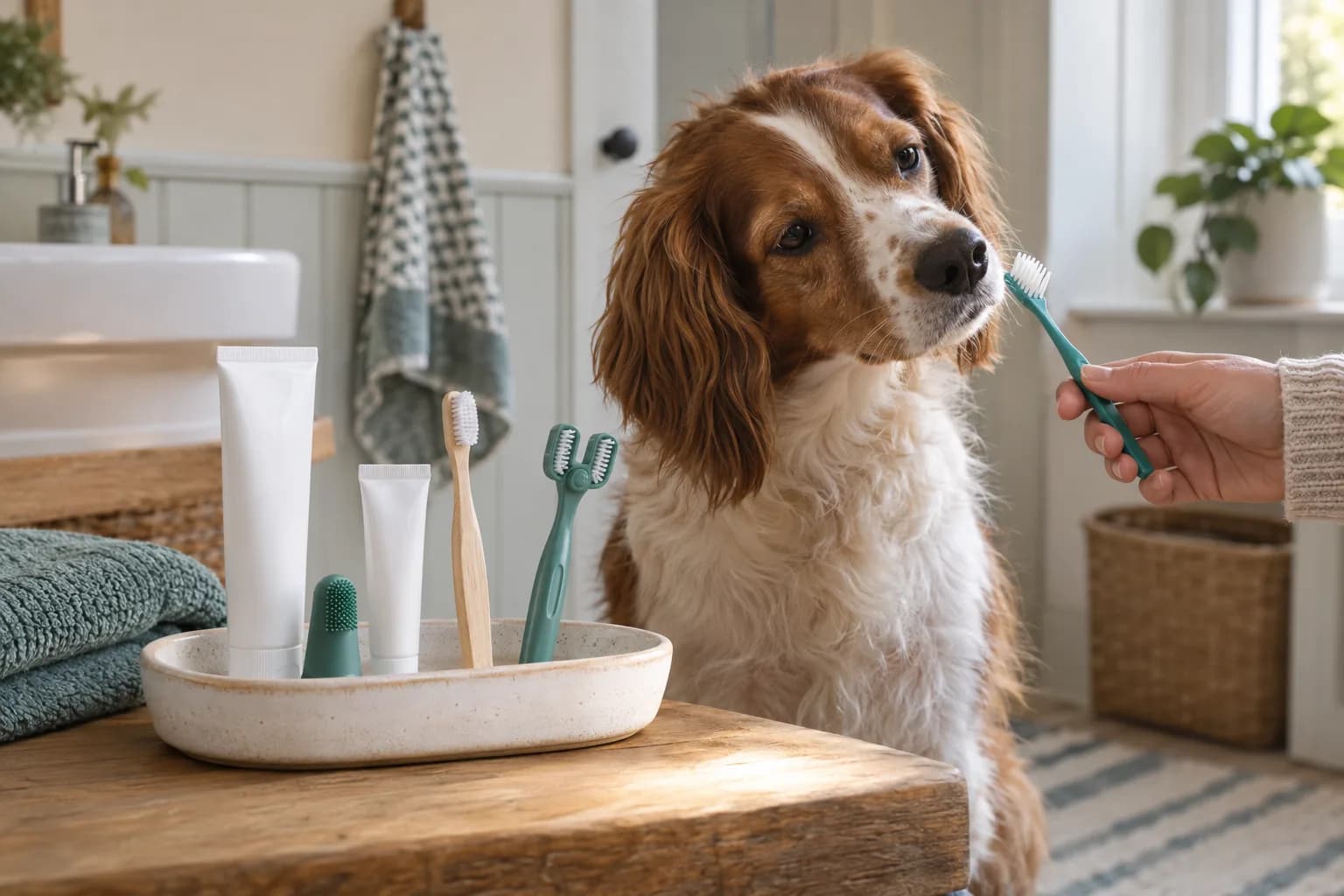
There is a mildly comic stage in every new tooth-brushing routine: you are holding a tiny brush, your dog has decided the toothpaste is dinner, and not one useful bristle has reached a tooth. This is normal. Most dogs are not born believing that a human should inspect their molars after breakfast, and even the calmest dog needs time to understand what is being asked.
The best dog toothpaste is therefore not simply the tube with the longest ingredient list or the most confident front label. It needs to be formulated for dogs, documented well enough that you can understand what you are buying, easy to replace in the UK and acceptable enough that brushing can become ordinary. A theoretically impressive paste abandoned at the back of a cupboard does nothing for plaque.
Our short answer: Virbac C.E.T. is the best all-round place to start for most UK households because it combines a transparent formula with dependable UK availability. Beaphar is the practical value choice, particularly when a larger tube is useful. Petsmile has the strongest independent product-specific evidence signal of the three, but its UK supply and price are less predictable.
The best dog toothpastes in the UK
Pick 1 · best all-round UK choice
Virbac C.E.T. Enzymatic Toothpaste
The formula is unusually easy to scrutinise. Virbac publishes the dual-enzyme system—glucose oxidase and lactoperoxidase—alongside the complete composition and clear daily-use instructions. The paste is designed to be swallowed without rinsing, comes in a 70g tube and is readily available from UK veterinary and pet retailers. Poultry flavour will not sound appealing to a human, but it may remove one of the biggest obstacles to regular brushing: persuading a dog that the brush is worth tolerating. For a household starting from scratch, this is the most practical balance of transparent information, routine availability and manageable tube size.
Keep in mind: Virbac’s enzyme and plaque statements are manufacturer claims; this specific toothpaste does not appear on the current VOHC accepted-products list we checked. That does not make it a poor choice, but it does mean we would buy it for its clear formulation and everyday usability rather than present it as the most independently substantiated paste. Fish and poultry versions can also differ in availability, composition and price, so check the exact flavour and tube instead of assuming every listing is identical.
Pick 2 · best straightforward budget tube
Beaphar Toothpaste for Dogs & Cats
Beaphar offers a larger 100g tube at the value end of the shortlist, making it easier to sustain a routine in a multi-dog household or with a dog that needs a generous taste-and-introduction period. The published formula includes glucose oxidase, subtilisin, hydrated silica, sodium hexametaphosphate and zinc citrate. It is fluoride-free, liver-flavoured and designed for dogs and cats to swallow without rinsing. The brand also publishes an age threshold and straightforward brushing directions, so this is not an anonymous marketplace paste with no meaningful product information behind it.
Keep in mind: The current VOHC list does not show a product-specific plaque or tartar acceptance for this Beaphar toothpaste. Its attraction is therefore practical—tube size, UK availability and an animal-friendly flavour—rather than the strongest independent efficacy marker in our comparison. The manufacturer lists several active and abrasive ingredients, so use only the instructed amount, introduce it gradually and check with your vet before starting if your dog has a painful mouth, recent dental treatment or a known sensitivity.
Pick 3 · best evidence marker when available
Petsmile Professional Pet Toothpaste
Petsmile earns its place for a reason none of our other shortlisted pastes can currently match: the Veterinary Oral Health Council lists the named product as accepted for a plaque-control claim. VOHC assesses submitted evidence against its protocols, so this is more informative than a large number of marketplace stars or a vague ‘vet recommended’ badge. It is the option we would investigate first when product-specific evidence matters more than finding the easiest tube on a UK high street, and when a dog accepts one of the available flavours.
Keep in mind: UK supply is far less predictable than for Virbac or Beaphar, and importing an expensive tube makes little sense if replacement stock will interrupt the routine. The VOHC seal is also precise: it supports the stated plaque claim for the named product and does not certify every claim, flavour or product sold by the company. Confirm that the listing is the exact Petsmile Professional Pet Toothpaste, check the seller and delivery date, and compare the landed price rather than the headline price alone.
How we chose—without pretending we tested the taste
This is a research-led buying guide, not a hands-on product test. We checked manufacturers’ current ingredient lists, tube sizes, flavours, directions and age guidance. We looked for independent product-specific evidence and asked the unglamorous questions that matter after week three: Is it actually formulated for pets? Can it be swallowed as directed? Is the tube easy to replace in the UK? Are the instructions precise enough to use safely? Is there a flavour a reluctant dog may accept?
We did not score aroma, texture or canine enthusiasm because we did not physically test these tubes. Those experiences also vary markedly between dogs: the poultry paste one spaniel regards as treasure may cause another to leave the room. We did not use marketplace star ratings as a proxy for plaque control, and we did not award points merely because a brand uses words such as ‘professional’, ‘advanced’ or ‘enzymatic’.
Dental products attract confident claims, so we gave the greatest weight to transparent formulations, realistic instructions and the Veterinary Oral Health Council’s accepted-products list. VOHC acceptance is not the only route to a useful product, but when it exists for the exact product and claim, it is a meaningful distinction.
We also considered continuity. Tooth brushing works as a habit, not a one-off treatment. A paste that is affordable, tolerated and readily replaced can be a more sensible household choice than a difficult-to-source option with a stronger paper credential.
Dog toothpaste compared
| Product | Why it made the list | Best suited to |
|---|---|---|
| Virbac C.E.T. | Published dual-enzyme formula; daily-use instructions; established UK supply | Most owners starting a regular routine |
| Beaphar | Larger tube; transparent ingredients; easy no-rinse use | Value-conscious multi-pet homes |
| Petsmile Professional | VOHC accepted for plaque control | Owners prioritising product-specific evidence and able to find UK stock |
What matters in a dog toothpaste?
Dog-safe beats minty-fresh
Use toothpaste formulated for pets, not the human tube beside your sink. Dogs swallow toothpaste rather than rinsing and spitting. PDSA’s dental guidance recommends dog-safe paste and says daily brushing is the best way to remove plaque before it hardens into tartar.
Enzymes are useful, but the brush still has a job
Enzymatic toothpastes are popular because their formulas are designed to help control oral bacteria. That may make them a useful partner to brushing; it does not turn a lick of paste into the equivalent of cleaning the tooth surface. Think of toothpaste as the supporting actor. Regular, gentle brushing gets top billing.
Evidence should be specific
A VOHC seal relates to a named product and a stated plaque or tartar claim. It is not a blanket safety certificate, and it does not mean every product from the brand has earned the same seal. Check the current list and the exact wording.
Flavour is a training tool, not a cosmetic extra
Dogs do not need toothpaste to taste minty or leave the sort of breath a human associates with cleanliness. A meat or fish flavour can make the first stages of handling much easier, particularly when the dog is rewarded for calm participation. The useful flavour is simply the one your dog accepts without becoming so excited that they chew the brush or fight to swallow the entire serving.
If you are unsure, buy one modest tube rather than a multipack. Let the dog sample a pinhead amount first and observe them afterwards. That small trial tells you more about future cooperation than a hundred reviews from owners of other dogs.
Tube size affects value only when the paste gets used
A larger tube usually lowers the cost per gram, but dental paste has an expiry date and the nozzle can become messy if it is handled every day. One dog learning slowly may be better served by a smaller first purchase. Multiple dogs already comfortable with brushing may make excellent use of a 100g tube. Compare the usable amount and replacement cost, not just the checkout price.
How to choose one your dog will actually use
- Begin with flavour, not force. Offer a pinhead smear from a clean finger or spoon, praise calm interest and finish. The first session does not need to involve a tooth.
- Teach mouth handling separately. Briefly touch the cheek, lift a lip and reward. Work on both sides over several days before introducing a brush.
- Add one easy surface. Start with an accessible outer canine or cheek tooth. One comfortable stroke is a successful session; build duration only while the dog remains relaxed.
- Choose a soft, appropriately sized brush. A large brush in a small mouth makes accuracy—and goodwill—unlikely. A long handle can help reach rear teeth, while a finger brush may feel less strange at first.
- Use very little paste. Follow the product directions. More foam or flavour does not mean more cleaning, and an overloaded brush can make swallowing and wriggling more likely.
- Aim for a predictable routine. Daily is ideal. Use the same quiet place and cue, keep sessions brief and end with something the dog values.
Many owners find it easier to brush the outside surfaces with the mouth closed rather than trying to prise the jaws apart. Sit or stand beside the dog instead of leaning over them, keep movements gentle and stop if you see fear, guarding or pain. Progress can take several weeks; speed is not the objective.
Toothpaste supports the routine but does not diagnose or treat dental disease. If a previously cooperative dog suddenly resists, assume discomfort is possible rather than labelling them difficult.
If you see bleeding gums, a broken tooth, swelling, persistent bad breath, difficulty eating or obvious pain, book a veterinary examination rather than trying to brush the problem away. Our vet-reviewed guide to periodontal disease in dogs explains the warning signs.
Common questions
What is the best enzymatic toothpaste for dogs?
For easy UK availability and a clearly published formula, Virbac C.E.T. is our all-round choice. It is designed for daily use and its dual-enzyme ingredients are named rather than hidden behind a proprietary-sounding headline.
“Enzymatic” alone is not proof of superior results, however. Compare the exact product, directions and evidence, then consider whether your dog will tolerate it. Consistency and brushing technique still do the practical work.
Can I use human toothpaste on my dog?
No. Human products are designed to be spat out, while dogs usually swallow what is put in their mouths. Some human toothpastes may contain ingredients or concentrations that are inappropriate for pets.
Choose a product explicitly formulated for dogs or pets and follow its directions. If your dog has eaten a significant amount of human toothpaste, retain the packaging and contact your vet for advice rather than guessing from the flavour or brand.
Will toothpaste remove established tartar?
Not reliably. Soft plaque can be disrupted by brushing, but once it has mineralised into hard tartar, a paste cannot simply melt it away at home. Surface staining and tartar are also easy for an owner to confuse.
Ask your vet to examine any hard deposits, red gums, pain or bad breath. Do not scrape a dog’s teeth with household or online dental tools: slipping can damage the enamel, gums or soft tissues, and cleaning a visible surface does not address disease below the gum line.
What if my dog will not tolerate a toothbrush?
Go back several steps and train lip handling, flavour acceptance and a brief touch as separate skills. A veterinary nurse may be able to demonstrate positioning and a suitable brush. Dental diets, chews, wipes and water additives are sometimes useful adjuncts, but choose evidence-led products and do not assume they reproduce the mechanical effect of brushing.
How often should I brush my dog’s teeth?
Daily brushing is the useful target because plaque begins to reform quickly and repetition turns an unusual handling exercise into a predictable routine. Choose a time you can sustain—after the final walk, for example—rather than attempting an elaborate session once a week. Even a short, calm brush of the outer tooth surfaces is more constructive than an occasional battle for perfect coverage.
If daily brushing is not yet realistic, start below the dog’s tolerance threshold and build frequency before duration. Let the dog lick a small amount of dog toothpaste, practise lifting one lip, then introduce a finger brush or soft toothbrush for a few seconds. Stop while the dog is still comfortable. Sudden bad breath, bleeding, facial swelling, difficulty eating or obvious oral pain needs a veterinary examination rather than firmer brushing or a different flavour.
Sources checked
We checked the current product pages from Virbac and Beaphar, the VOHC accepted-products list, and PDSA dental guidance on 27 September 2026.