Buying guides
Best dog walking bags UK: three designs that earn their place
A good dog walking bag does one quiet, wonderful thing: it stops leads, treats, keys, bags and a half-used tennis ball becoming a trouser-pocket crisis.
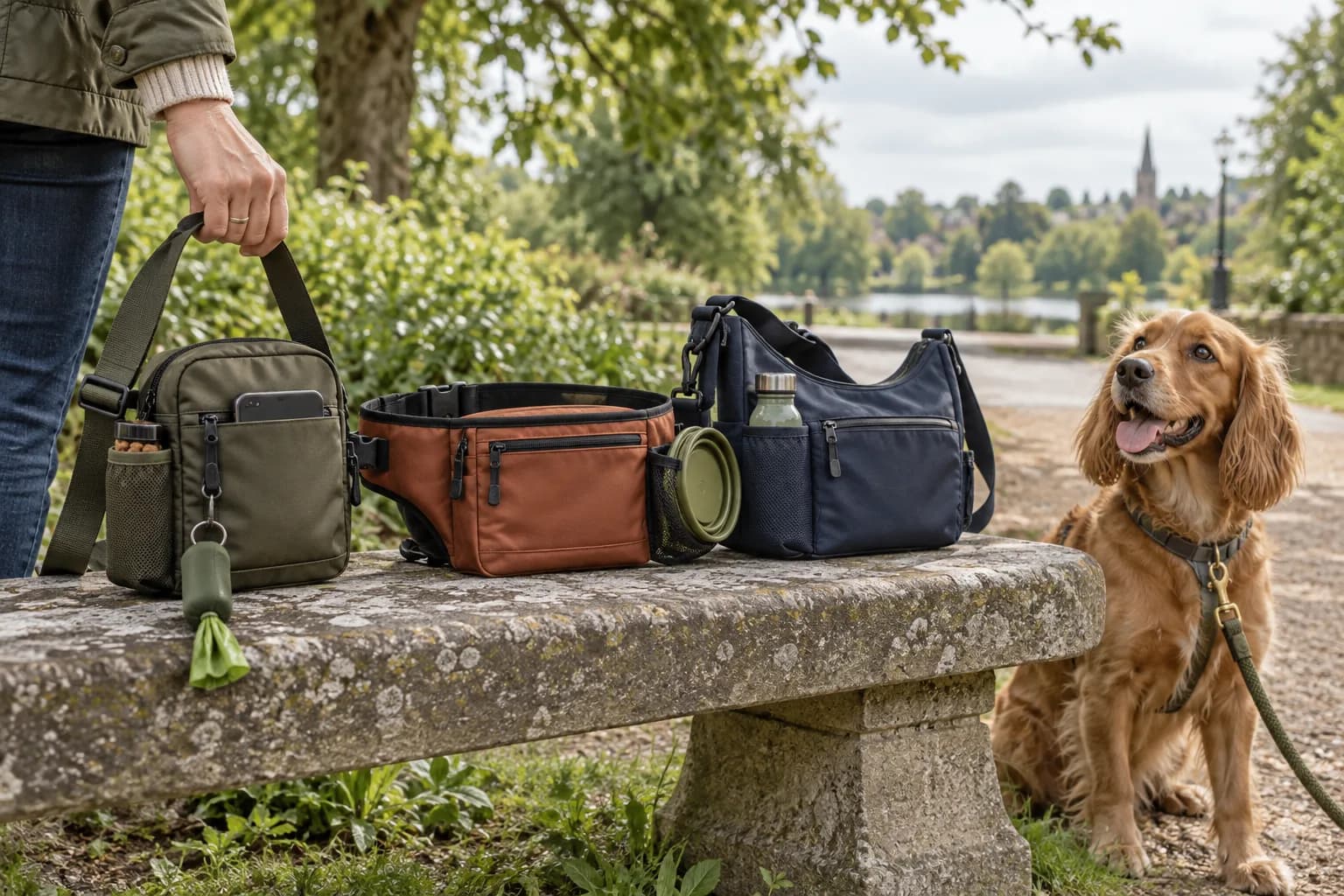
Most ordinary bags can survive a dog walk. Fewer make one easier. The difference is in the small irritations repeated every day: treats that require two hands, clean bags buried under keys, a bottle that tips sideways, or the tied bag you are forced to carry when the next bin is apparently in another county.
A dedicated walking bag should remove that friction without becoming another object to manage. It needs to sit securely while you handle a lead, open with cold or gloved fingers and keep food, valuables, water and waste sensibly separated. Capacity helps only when the layout makes the contents reachable.
Our short answer: Barking Bags’ Original is the best-equipped choice for long or kit-heavy walks and the only shortlisted design with a purpose-built used-bag pocket. DOOG’s Walkie Bag is a neater everyday crossbody with enough organisation for the park. Ruffwear’s Home Trail is the one we would shortlist for a close, low-bounce waist fit during training or a faster pace.
The best dog walking bags in the UK
Pick 1 · best for carrying the whole walk
Barking Bags Original Bag
This is the most purpose-built design in our shortlist. A front dispenser keeps clean bags accessible, a separate breathable side pocket carries a tied used bag to the next bin, another pocket takes a compact 500ml bottle, and valuables sit behind a zip rather than sharing space with treats. The adjustable strap allows crossbody or shoulder wear, while rear clips convert it to a waist bag. At 32 × 25 × 8cm it can absorb the untidy reality of a longer walk—water, bowl, toy, phone, keys and spare bags—without turning the main compartment into one undivided rummage.
Keep in mind: This is a genuine walking bag, not an invisible treat pouch, and the width may feel substantial on a small frame or fast run. Materials and weather claims differ between colours: the current black and midnight-blue descriptions specify waterproof outers and liners, while other finishes may use different trim or only a waterproof liner. Check the exact colour page, strap length and bottle dimensions before buying, particularly if you wear it over a thick winter coat.
Pick 2 · best neat crossbody option
DOOG Walkie Bag
At 21 × 25 × 6cm, the DOOG is smaller and visually simpler than the Barking Bag while preserving the features most owners reach for every day. It has a waterproof inner sleeve for a phone, an integrated pocket supplied with pickup bags and a side holder sized for either a water bottle or tennis ball. The broad striped strap, light construction and upright format make it easy to throw over a coat for a pavement-and-park circuit. It is the middle ground for someone who has outgrown a treat pouch but does not want to carry expedition quantities of dog equipment.
Keep in mind: The side holder cannot carry both a bottle and ball simultaneously, and DOOG describes the internal phone sleeve rather than the whole bag as waterproof. That is an important limitation in sustained rain. The open-topped bottle area and comparatively shallow depth also reward disciplined packing: heavy keys, loose treats and a full bottle can make any small shoulder bag swing. Use the internal organisation and shorten the strap so the bag sits close to the body.
Pick 3 · best low-profile waist pack
Ruffwear Home Trail Hip Pack
Ruffwear’s Home Trail is shaped around movement rather than maximum capacity. Two zipped compartments separate essentials, an adjustable belt holds the weight close to the waist and the same strap can convert to crossbody wear when that is more comfortable. The low profile is valuable during training, brisk walks and light trails, where a bouncing shoulder bag becomes irritating and frequent one-handed access to rewards matters. Ruffwear also publishes materials and care instructions, so owners can judge the construction rather than buying an anonymous pouch from dimensions alone.
Keep in mind: Capacity is deliberately limited: this is not the choice for a large bottle, several toys or the family’s spare layers, and there is no dedicated external carrier for a tied used bag. UK colours and stock can vary. Because the belt sits close to clothing, check whether its adjustment range works over both summer layers and a padded coat, and consider where the buckle lands when bending or wearing a rucksack hip belt.
How we chose
This is a research-led shortlist based on current published dimensions, materials, pocket layouts, care instructions, strap options and weather wording. We have not worn these three bags through a wet British winter, so we do not make personal claims about long-term zip life, strap rub, colour transfer or mud resistance.
Instead, we looked for designs with a clear job and enough manufacturer detail to judge before buying. A vague ‘large capacity’ description tells us less than measurements and a list of what each pocket is meant to hold. A ‘waterproof’ headline is less useful than knowing whether it refers to the outer, liner or one internal sleeve.
We also resisted padding the list with near-identical pouches. A full walking bag, a compact crossbody and a waist pack serve different people. Ranking three shapes as though everyone carries the same kit would be less helpful than identifying the circumstance in which each one earns its place.
Finally, we considered the awkward parts of a real walk: reaching treats one-handed, carrying a used bag between bins, moving from T-shirt to winter coat and cleaning crumbs from a seam. These practical details tend to outlast the excitement of a new colour.
Dog walking bags compared
| Bag | Published size | The deciding feature |
|---|---|---|
| Barking Bags Original | 32 × 25 × 8cm | Separate used-bag pocket plus bottle space |
| DOOG Walkie Bag | 21 × 25 × 6cm | Compact crossbody with waterproof phone sleeve |
| Ruffwear Home Trail | Low-profile waist pack | Stable waist or crossbody carry |
Which bag shape suits your walks?
Choose a full bag if you are the quartermaster
If you routinely carry water, a collapsible bowl, spare lead, toy, treats, phone and someone else’s gloves, capacity is not indulgence. A dedicated bottle pocket and separation between clean and dirty items matter more than a fashionable silhouette.
Choose a compact crossbody for everyday pavement and park walks
Crossbody bags are quick to put on over changing layers and easy to swivel forward when you need something. Look for a strap long enough for your winter coat and a shape that does not swing into the dog when you bend.
Choose a waist pack for training or a faster pace
A well-fitted waist pack keeps weight close and leaves both shoulders free. It is excellent for frequent treat delivery. The trade-off is volume: water and a ball may need somewhere else to live.
Do a five-minute packing test before ordering
Put the items you genuinely carry on a normal walk on a table—not the idealised minimalist selection. Include your phone in its case, keys, a roll of bags, treat container, ball, water and bowl where relevant. Measure the largest rigid item and total bulk. This quickly reveals whether you need the Barking Bag’s capacity, the DOOG’s middle ground or only Ruffwear’s two compartments.
Then remove everything you have carried for months without using. A walking bag should make necessary equipment easier to handle, not become permanent storage for old receipts, six tennis balls and an unidentified biscuit.
Fit should match how you handle the lead
Right- and left-handed owners may prefer the bag on different sides, especially when delivering training rewards. Crossbody bags should slide into reach without crossing the lead or striking the dog when you bend. Waist packs should remain stable without being tightened to discomfort. If you use a long line, keep clips, cords and loose strap ends away from anything that can snag.
Small details that become big details outdoors
- One-handed treat access: closures should be secure but should not require putting down the lead or looking away from the dog.
- A cleanable lining: oily treats, biscuit dust and rain eventually meet. Removable inserts or wide openings make routine cleaning easier.
- Honest water resistance: “waterproof sleeve”, “water-resistant fabric” and “waterproof bag” are not interchangeable. Zips and seams may remain vulnerable.
- Quiet hardware: dangling clips can tap against keys or a bottle for the entire walk and may bother a sound-sensitive dog.
- Used-bag separation: if your route is short of bins, an external washable or ventilated pocket is more useful than optimistic minimalism.
- Fit over outerwear: check maximum strap length against your bulkiest coat, not a T-shirt, and leave room to move without the bag swinging.
- A stable bottle position: water is usually the heaviest item. It should sit upright and close to the body rather than levering a small bag sideways.
- Secure valuables: phones and keys deserve a zipped compartment away from an open treat pocket and a damp tennis ball.
How to keep a walking bag pleasant
Empty it after wet or muddy walks, remove treat crumbs and let every compartment dry open. Follow the care label rather than assuming a fabric bag can go through a hot machine cycle; waterproof coatings and structured inserts may need gentler treatment. Wash reusable treat pouches separately and clean bottle pockets after leaks.
Inspect the strap attachment, buckle, belt clips and zip pulls regularly. A slowly fraying strap is easy to miss until a loaded bag drops near traffic or an excitable dog. Retire or repair damaged hardware before the next walk.
Common questions
Is a dog walking bag better than a treat pouch?
For focused training sessions or short local walks, a treat pouch is often enough and may give faster access. It also keeps food residue in one small, washable area rather than throughout a larger bag.
A dog walking bag earns its extra size when you also carry water, a ball, phone, keys, spare bags and weather-dependent kit. The right answer is the smallest format that holds the items you genuinely use without overfilling.
What should I keep in it?
At minimum: more pickup bags than you expect to need, treats if useful, your phone and keys. Add water and a bowl, a small light, tick remover, spare lead, pet-safe wipes or basic first-aid items according to route, season and distance.
Carry medication or emergency information when your individual dog needs it, but do not leave temperature-sensitive medicines or perishable treats in the bag between walks. Include an owner contact card if the bag is likely to be carried by a dog walker or family member.
Can I put a used poo bag inside?
We would keep it outside the main compartment in a dedicated, washable holder or sealed carrier, away from treats, drinking equipment and personal items. Knot the waste bag securely and clean the carrier frequently.
The Barking Bags design specifically provides a breathable external pocket for this awkward interval before the next bin. Even then, dispose of the bag promptly rather than treating the pocket as storage.
Is a waterproof bag worth paying more for?
It may be if you walk in all weather or carry electronics, but inspect the wording carefully. A waterproof outer can still have vulnerable zips; a waterproof liner may keep leaked water in as effectively as it keeps rain out. For most owners, a secure internal phone sleeve plus a water-resistant, quick-drying outer is a practical combination.
Where should a dog walking bag sit?
Close enough that it does not swing when you change direction, but not so tight that it restricts your stride or shoulder. For a crossbody bag, adjust the body to the side opposite your lead hand or wherever you can reach treats without crossing the lead. It should remain above the dog’s head when you bend and should not obscure your view of a small dog walking close beside you.
With a waist pack, centre or offset the buckle so it does not press when you crouch, then test the fit with the heaviest item loaded. A full water bottle exposes bounce that an empty fitting misses. Recheck strap ends around long lines and mobility aids, and practise accessing bags and rewards at home. The best position is the one that lets you manage the dog and environment with both hands available, without the bag becoming a pendulum or snag point.
Sources checked
We checked the current UK product information from Barking Bags, DOOG and Ruffwear on 27 September 2026. Availability, colours and prices can change; recheck the exact model before buying.